


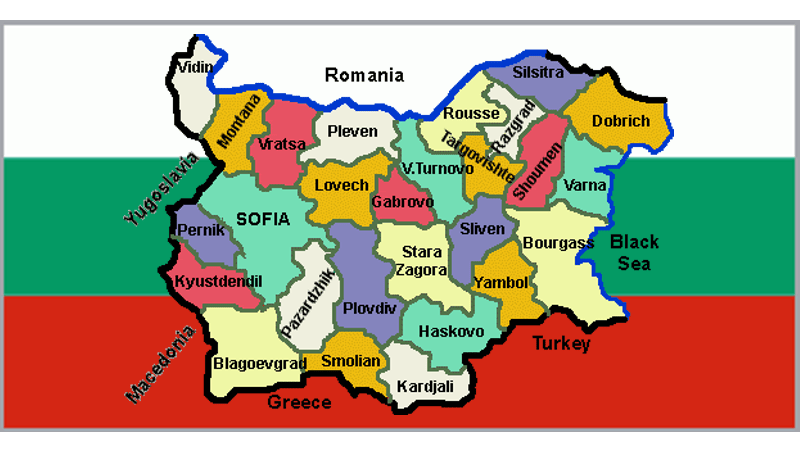


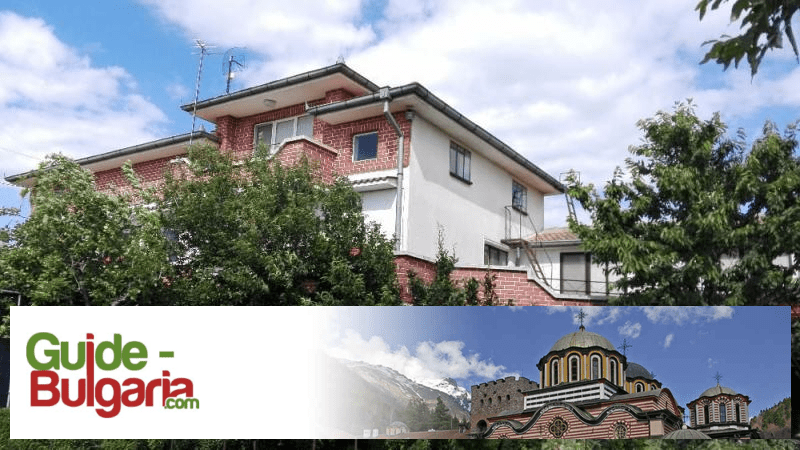


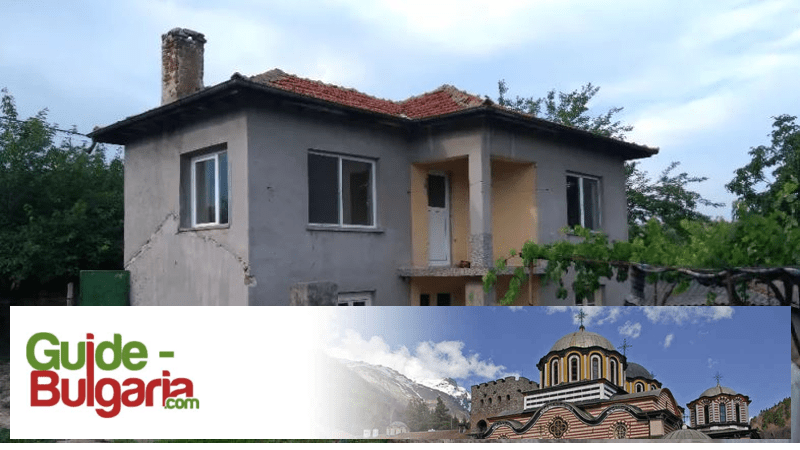
house in village of Cheshnegirovo, Plovdiv, Country house, Cheshnegirovo from Guide-Bulgaria.com
- € 25,000€
- € 25,000€
Description
VisitToBulgaria.com code: ELE36551-SatrBGStAtCheshnegirovo
Publisher: Elevat Estates Ltd. (info@elevat-estates.com)
More info about this house in village of Cheshnegirovo, Bulgaria
Two storey renovated house in one of the prettiest recesses in Bulgaria. Mountain views, monasteries, nearness to the second largest city in Bulgaria. Just 1.15 hour from the Sofia Airport. Mineral springs, Monasteries, marvelous architecture and many attractions.
PRICE: 25 000 EUR
/16 695 GBP/
Location:
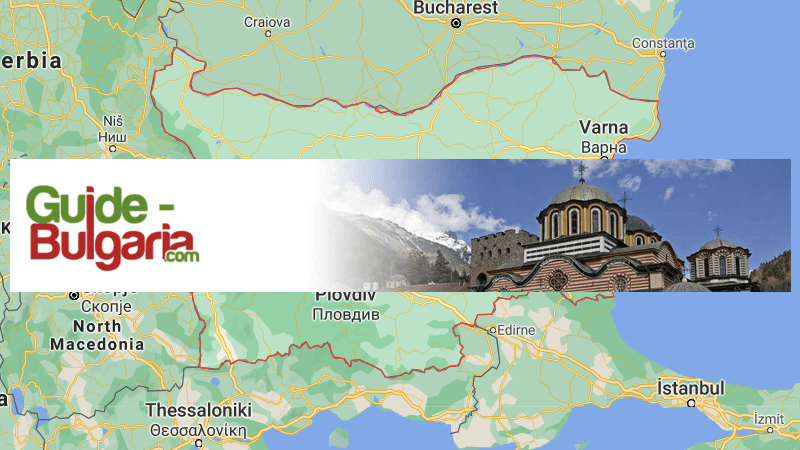
Village of Cheshnegirovo is situated just 20 km from the second largest city in Bulgaria a? Plovdiv.
a? Plovdiv
Plovdiv is the second largest city in Bulgaria. Itta?s situated in the west part of Upper Thracian Lowland, in the Maritsa River valley. It has population of about 376000 and is located 140 km away from the capital Sofia and 20 km from Assenovgrad.
Plovdiv is one of the ancient cities in Europe; it has nearly 8000 years of history.
It arose in the 5th century BC as a Thracian settlement, called Eumolpia. Later the city was conquered by Philip II of Macedonia and in his honour was named Philippopolis. Romans gave it the name of Thrimonzium. In the 6th century Slavs settled in the valley of the Maritsa River and introduced the name Pulden. In 1364 it fell under Ottoman rule and was renamed Filibe. In the first half of the 19th century the city flourished economically.
In 1956 the old town was declared an architectural reserve.
The Ethnographic Museum is housed in one of the biggest houses from the Revival period. The house has twelve rooms with two craft roofs, and wall painting. Many of the crafts are presented in the museum exposition.
Another places of interest in the Old town are the clock tower, Sahat tepe, the ancient pharmacy, the antique amphitheater, etc.
Plovdiv hosts the International Fair twice a year.
a? The Rose Valley
"The Rose valley" is situated between the Balkan Mountains and Sredna Gora. The valley has specific climate – mild and short winter, and warm and long spring. Roses need dampness and warmness; almost all oil-bearing rosessa? fields are concentrated in this region.
An oil-bearing rose called Damascene was imported from the Near East 300 years ago. Since the XVII century Bulgaria has made a name for one of the biggest producers of altar of roses in the world. Today it is the second world exporter of altar of roses after Turkey, extracting 1 tone of the altar per year. For the production of a liter of rose water is used 1kg of rose flowers, and for the production of 1 kg of rose oil are used about 3500 kg of rose flowers. The first rose picking season is 3 years after rose planting. The rose picking is manual and it begins early in the morning and finishes at noon at the latest. It is necessary blossoms to be fresh because the dampness and the aroma should be well preserved and extracted later in the distillation process. The production of Bulgarian rose oil is strongly connected with ancient traditions.
Each year the Rose valley hosts Rose Festival and Rose queen competition. In the Sunday morning people go to the rose field to reproduce traditional for rose picking customs.
In the town of Kazanlak is opened "The tower" Historical a?Ethnographic complex. Tourists have the opportunity to watch rose boiling in a primitive manner and certainly they can try rose oil products.
a? Starosel
The village of Starosel is situated in the territory of the Hissar Municipality, near to the Karlovo town, in the country of Oreshaka. In the year 2000, archeologists discovered the largest Thracian temple- tomb in the Southeastern Europe. According to the scientists, it dates back to the end of the V century and the beginning of the IV century BC and most probably is of Stalk, a Thracian ruler of the Odris Kingdom. Necropolis consists of eight mounds, each with different size. The tomb is located in a mound with 20 m of height and 85 m of diameter, figuring as a fortified wall. The enter of the sanctuary is 1.60 wide and its decoration is well-known as "wolves teeth".
The tomb is made of stone blocks, fastened together by iron clamps, and covered with lead. It consists of a southern parade stairway, two laterals, a passage, a main font, two chambers a?a rectangular and a circle one.
There are many Thracian tombs in Bulgaria, but that in Starosel has preserved the spirit of the ancient Thracians and makes strong impression with its sumptuousness.
a? Bachkovo Monastery
The Bachkovo Monastery is the second largest one in Bulgaria; itta?s situated in the Rhodope Mountains, among the Chepelarska River valley.
Surrounded by high rocky peaks, the monastery is located 1km from Bachkovo, 10 km from Assenovgrad, 28 km from Plovdiv.
In the 11th century, Gregory Bakuriani, a Byzantine commander chose this wonderful place in the Rhodopes to spend his retirement. In 1083yrs, together with his brother called Abazii, they founded St. Bogoroditsa of Petrich Monastery.
The monastery has numerous real estates – from the Rhodopes to the Thracian plane. Tsar Kaloyan conquered the Rhodope Mountains, and the monastery was included into Bulgarian territory. Under Tzar Ivan Alexander, the monastery became an important institution. The Bulgarian patriarch Evtimii Tarnovski was exiled in the monastery after falling under Turkish yoke. Here he developed his literary work.
The monastery was burnt down several times and only the ossuary and the St. Archangel Church have been preserved in their original appearance. Wall paintings, dating 11 – 14 century, are among the most treasured in the history of Christianity in Eastern Europe.
Paintings of one of the famous Bulgarian artists – Zahari Zograf, have been preserved in the St. Troitsa and St. Nikola Church. Among the most interesting are the portraits of church- donors , such as the portrait of Tzar Ivan Aleksander. The most famous miraculous icon of Bororoditsa Eleusa with a silver repousse cover, dating 1310, has been also kept there. There is a collection of plates, icons, books, the sword of the crusader named Fridrih Babarosa, etc.
The monastery has bed accommodation capacity of about 200 people.
a? Hissarya
This is a resort situated in Central Bulgaria, at 365 meters altitude, and a population of 9000.
Hissar is 40 km north of Plovdiv and 165 km east of Sofia.
It is in Roman times Hissar took shape as a settlement. It was protected as a fortress. Among the discoveries in the city are – Roman bathroom and a big amphitheater. In the period of ottoman invasion, the village was burnt down. In the 17th century, it was restored and was named Hissar – meaning a fortress.
Today, Hissarya is a balneological resort with more than 20 thermal springs. The temperature of the water is between 244AC and 499AC. The mineral water is lightly mineralized and have neither aroma, nor color. The mineral water is used both for drinking and balneological purposes. Good results have been reported on the treatment of diseases of the kidneys, liver, pancreas and the secretory system.
The winter in this area is soft, snow holds rarely, and the summer is not very hot. The Balkan range stops the cold draughts, coming from the north.
The historical museum in the town makes a strong impression on tourists with the show of archeological materials that trace back to the ancient times.
The antique Roman fortress called Augusta is one of the best-preserved monuments in Bulgaria and it was declared an archeological heritage.
The proprety:
Two storey brick, renovated house with total living area of 120 sq.m (60 sq.m per floor).
The property offers 750 sq.m garden. There are farm-building with 3 premises, Vine-arbor and draw-well. 2 parking a?places.
First floor:
a? 3 rooms
a? Bathroom (not finished)
Second Floor:
a? 3 rooms
PRICE: 25 000 EUR
/16 695 GBP/
Information about village of Cheshnegirovo, Bulgaria

Details
Address
-
City: Cheshnegirovo
-
State/county: Plovdiv
-
Area: Europe
-
Country: Bulgaria


Contact Information

- Global viewr

Global Audience.

